
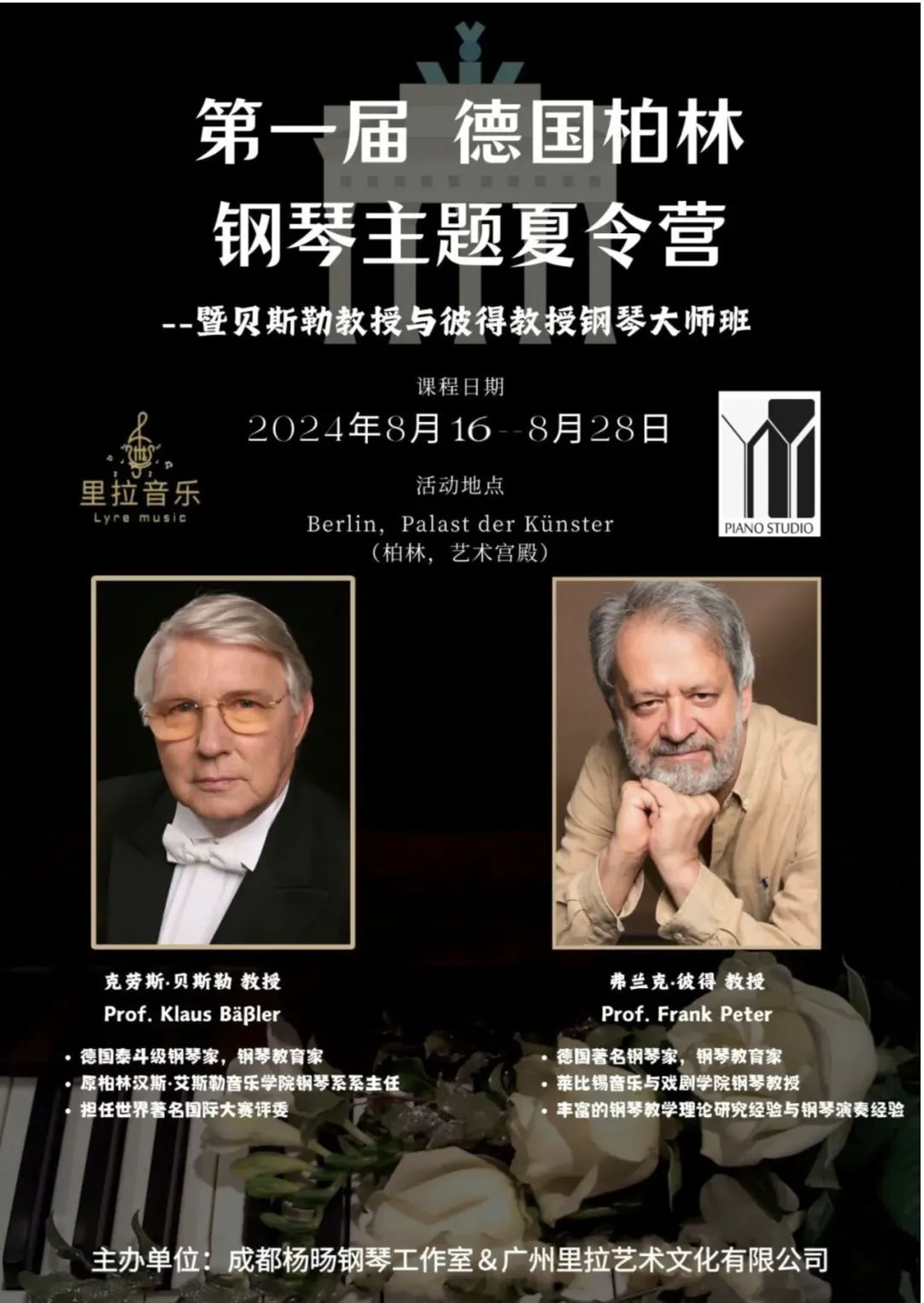
Musical Journey: Germany Piano Study Summer Camp
August 2026
Musical Journey
Germany Piano Study Summer Camp
13 Days · 4 Cities · 4 Master Teachers
Departure: August 16
Germany is not simply a country where music is taught. It is the country where much of the music we play was written, premiered, argued over, and refined across three centuries. To study in Germany — even briefly — is to encounter a musical culture that is still lived, still contested, still producing pianists and composers and thinkers who take it personally.
This 13-day summer camp is designed to give serious young pianists a real encounter with that world: master lessons with faculty whose careers are rooted in the German conservatory tradition, visits to the institutions and sites that shaped the repertoire they already play, attendance at professional concerts in the venues where this music belongs.
It is not a tour. It is a working trip.
Itinerary Overview
Berlin
The camp opens in Berlin — Germany's contemporary music capital, home to three world-class orchestras and a conservatory culture that has shaped generations of Asian pianists. Students will receive their first master lessons here, attend a briefing on the structure of German music education, and have time to visit key cultural sites: the Staatsbibliothek, the Philharmonie, the Konzerthaus.
Leipzig
Leipzig is Bach's city, and no pianist who plays Bach seriously should pass through it without stopping. The programme includes a visit to the Thomaskirche, where Bach served as Kantor for 27 years; a guided session at the Bach-Archiv; and master lessons focused specifically on Baroque interpretation — articulation, ornamentation, phrasing from the bass line up.
The Mendelssohn-Haus is also on the itinerary. Leipzig's conservatory, founded by Mendelssohn in 1843 and still bearing his name, is the oldest in Germany. Students will have the opportunity to tour the building and meet with current faculty.
Dresden
Dresden hosts the camp's chamber music intensive — two days of coached ensemble work, with students grouped across instruments for repertoire sessions. The Semperoper and the Zwinger complex are visited in the evening hours. Dresden's musical culture, rebuilt with remarkable care after the wartime destruction, is a lesson in what a city chooses to restore.
Potsdam
The final leg takes students to Potsdam and the Sanssouci Palace, where Frederick the Great maintained one of the most active private music courts in 18th-century Europe — a court that employed Carl Philipp Emanuel Bach, among others. The camp closes with an informal student showcase: each participant performs a short prepared piece for the group, in one of the historic rooms, with brief spoken remarks on what the trip has meant for how they hear the music.
Faculty
Four master teachers accompany and teach throughout the programme. All four have performance or teaching careers grounded in the German-speaking conservatory tradition. Specific faculty bios distributed upon registration.
Each student receives a minimum of two individual master lessons during the 13 days, plus participation in group coachings, ensemble sessions, and guided analytical listening.
Programme Structure
| Days | Location | Focus |
| 1–4 | Berlin | Orientation, master lessons, concert attendance |
| 5–7 | Leipzig | Bach/Baroque, Mendelssohn Conservatory visit |
| 8–10 | Dresden | Chamber music intensive, cultural visits |
| 11–13 | Potsdam | Closing sessions, student showcase, departure prep |
Detailed daily schedule distributed 4 weeks before departure.
What Is Included
- Round-trip international airfare (group booking, Chengdu departure)
- All ground transport within Germany
- Hotel accommodation (twin-share for students; single for parents)
- All scheduled meals during programme days
- Admission to all visited venues and concerts
- Master lesson fees
- Programme materials and certificate of completion
Cost
Students: ¥28,000 per person
Parents / accompanying adults: ¥15,000 per person
A non-refundable deposit of ¥5,000 is required to confirm a student place. Balance due by July 15.
Who Should Apply
This camp is appropriate for students who:
- Are working at approximately Grade 6 level or above
- Have a committed practice routine and are used to receiving direct feedback
- Are considering study abroad as a medium- or long-term path
- Or simply want a serious, non-tourist encounter with where this music comes from
Students do not need to speak German. All master lessons are conducted with translation support. Some independent navigation in German cities is expected — this is part of the experience.
END