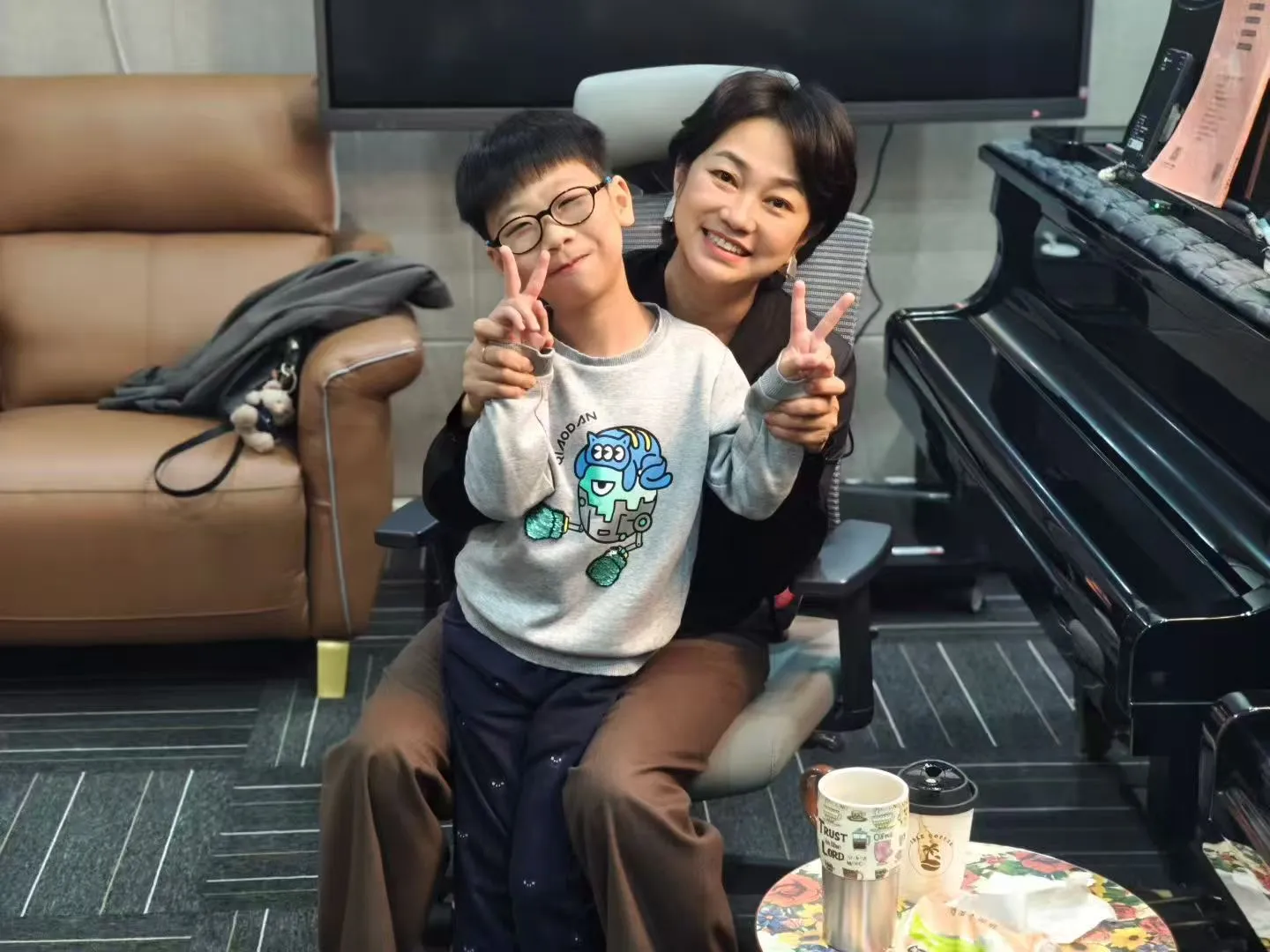
A 6-Year-Old Takes an 8-Hour Weekly High-Speed Train Journey for a Single Piano Lesson
2025
Every Thursday morning, a father and his six-year-old son board a high-speed train in Guiyang.
Four hours later, they arrive in Chengdu.
The boy has a piano lesson with Teacher Yang Yang.
Four hours after that, they are on a train home.
Eight hours of travel. One lesson. Every week.
The boy's name, as his family shares it with us, is Xiao Ma — Little Horse. He started piano at four. By five he had outgrown what his local teachers in Guiyang could offer, and his father began researching options. He found Tone Galaxie through a recommendation, attended a trial lesson with Teacher Yang Yang, and made a decision the same afternoon.
"I asked Teacher Yang Yang: is this worth the trip?" his father said. "She told me honestly — it depends what you want. If you want him to pass exams, there are fine teachers in Guiyang. If you want him to learn music, come."
They have been coming every week for more than a year.
The Practice Routine
Xiao Ma practices every day. His father tracks the hours.
Morning: 40 minutes before school. Evening: 30–40 minutes after dinner. Weekends: longer, sometimes 90 minutes broken into two sessions. The sessions are structured — warm-up, technical work, repertoire — following the plan Teacher Yang Yang sends home after each lesson.
His father does not play piano. He sits in the room.
"I don't understand what he is doing technically," he said. "But I understand focus. I understand whether he is paying attention or just moving his hands. My job is to make sure the practice is real."
When asked how he learned to tell the difference, he laughed. "After a year of sitting there, you start to notice. There's a sound when he's listening to himself, and a different sound when he's somewhere else."
The 10,000-Hour Commitment
Xiao Ma's father speaks about the 10,000-hour principle — the research-backed idea, popularized by Malcolm Gladwell, that deep expertise requires roughly 10,000 hours of deliberate practice — not as an abstraction but as a personal contract.
"I told him when we started: we are going to do this together. Not 'you practice and I watch.' Together. I will be in the room. I will learn what I need to learn to support him. And we will finish what we started."
At their current pace — approximately 400 hours per year — Xiao Ma will reach 10,000 hours around the age of 31. His father is not concerned about the timeline.
"The number is not the point. The number is a way of saying: we are serious. We are not doing this halfway. Whatever he becomes, he will know what it means to commit to something hard over a long time. That is worth more than any certificate."
What Teacher Yang Yang Says
Teacher Yang Yang describes Xiao Ma as "a child who listens."
"Many children hear themselves playing. Xiao Ma listens. There is a difference. When he makes a mistake, he stops — not because I told him to, but because something didn't sound right to him. At six, that is unusual."
She is careful not to project too far ahead. "He is six. My job right now is to make sure music stays beautiful for him — that it doesn't become a burden or an obligation. If he is still playing at sixteen because he wants to, we will have done something right. If he stops at twelve and goes on to become a doctor who loves music, that is also right."
On the weekly train journey, she is matter-of-fact. "It is a significant commitment. I do not take it lightly. I try to make sure every lesson is worth it — that they leave with something they couldn't have gotten without coming."
The Journey Itself
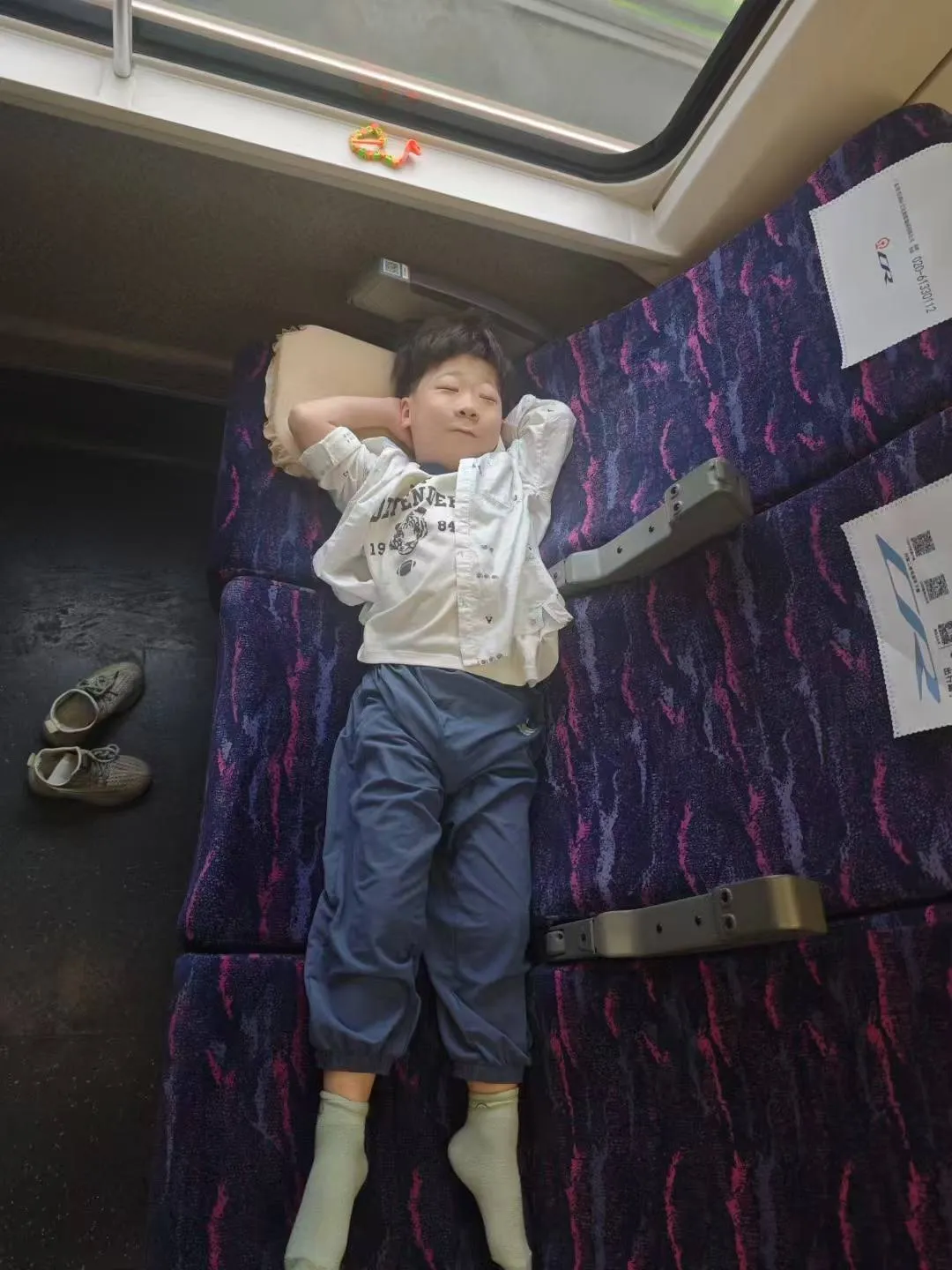
Xiao Ma has done the Guiyang–Chengdu route often enough that it has its own rhythms. He brings a notebook and draws during the journey — animals, mostly, and occasionally pianos. He sleeps on the way home.
His father brings work. He is a project manager at an engineering firm and coordinates by phone and laptop during the four-hour windows.
"People ask me how I have time for this," he said. "I ask them how they have time not to. Your child is six years old for exactly one year. You can spend it or not spend it. I would rather spend it."
He paused.
"Also — have you seen him play? He is very good."