
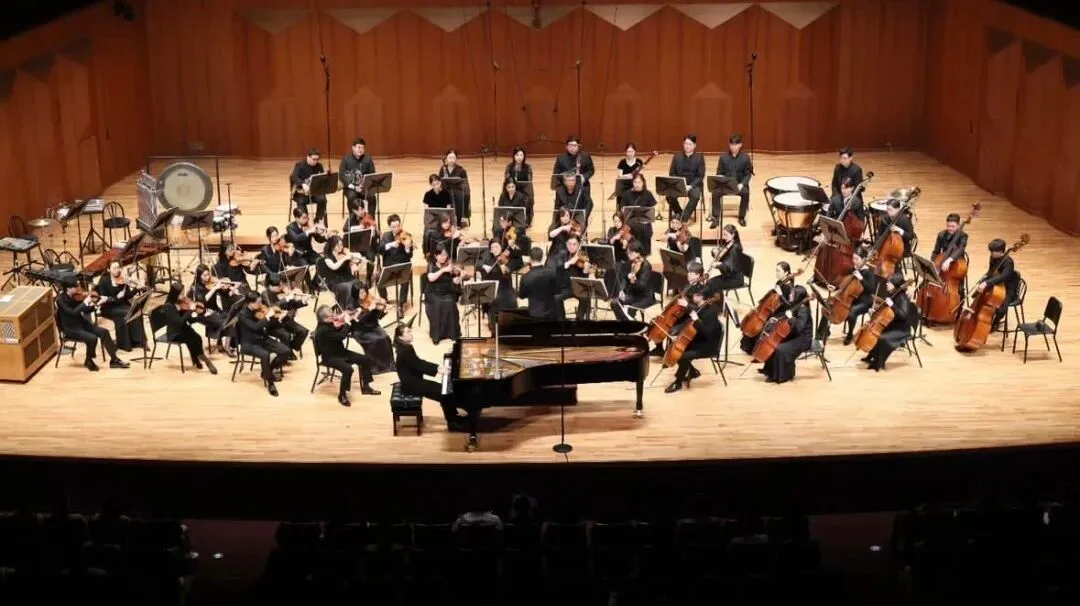
Musical Dream Launch — Korea Study Abroad
2026
Musical Dream Launch
— Korea Study Abroad Helps You Reach the Peak!
Korea has quietly become one of the world's most competitive destinations for music study. Its conservatories rank among Asia's finest; its faculty are a blend of European-trained masters and homegrown virtuosos; its students compete — and win — on international stages from Geneva to Hannover. For Chinese music students looking beyond the familiar options of Germany, Austria, and the United States, Korea offers something increasingly compelling: world-class instruction, an approachable culture, reasonable living costs, and a growing network of alumni already working in major Asian orchestras and academies.
This information session, held in Chengdu, is designed to answer the questions families actually have — not the brochure version, but the real one.
5 Reasons to Study Music in Korea
1. Faculty trained at the top of the European conservatory system
The majority of full professors at Korea's leading music schools — Seoul National University, Korea National University of Arts (K-Arts), Yonsei, Sungkyunkwan — completed doctoral or advanced performance studies in Germany, Austria, or France. You are, in many cases, learning from the same pedagogical lineage you would access in Europe, at a fraction of the cost and with far less cultural distance.
2. A serious audition culture that prepares students for international competition
Korean conservatory culture is demanding in ways that are genuinely useful. Students are expected to perform regularly, under pressure, in front of peers and faculty who give direct feedback. This is not always comfortable — but it produces musicians who know how to perform when it counts.
3. Scholarship pathways for international students
Several Korean government and university scholarship programs are open to international applicants, including the Global Korea Scholarship (GKS), which covers tuition, housing, and a monthly stipend. Competition is real, but Chinese applicants with strong competition records and faculty letters have a reasonable pathway.
4. Proximity and practical logistics
Seoul is a 3-hour flight from Chengdu. Parents can visit; students can return home for holidays without the cost and exhaustion of a transoceanic journey. Time zones align closely enough that regular video check-ins with family are easy. Emergency visits are possible in a way they are not from Hamburg or Vienna.
5. A vibrant chamber music and ensemble culture
Korean conservatories invest heavily in chamber music, orchestra, and collaborative performance. Piano students are expected to coach chamber groups, accompany soloists, and play in shared programmes — not just to develop solo repertoire. For families whose students will pursue performance careers, this breadth matters.
How to Apply
The application process varies by institution and scholarship type, but generally requires:
- Audition recording (video, programme specified by the school)
- Academic transcripts (Chinese middle/high school, translated and notarized)
- Teacher recommendation letters (preferably from faculty known in the field)
- Language documentation (Korean is not required at all schools; TOPIK scores strengthen applications but are not universally mandatory for music programmes)
- Competition record and performance history
Teacher Yang Yang and the Tone Galaxie team can assist with audition preparation, programme selection, and the letter-of-recommendation process.
Session Details
This information session is open to students at all levels who are considering Korean conservatory study — undergraduate, graduate, or exchange. Parents are welcome and encouraged to attend.
Topics covered:
- Overview of Korean music schools by specialization and faculty strength
- Scholarship types, deadlines, and success rates for Chinese applicants
- Audition preparation: what Korean faculties are looking for
- Logistics: housing, language, cost of living, student visa
- Q&A with Teacher Yang Yang and faculty guests